Baked Chicken Legs
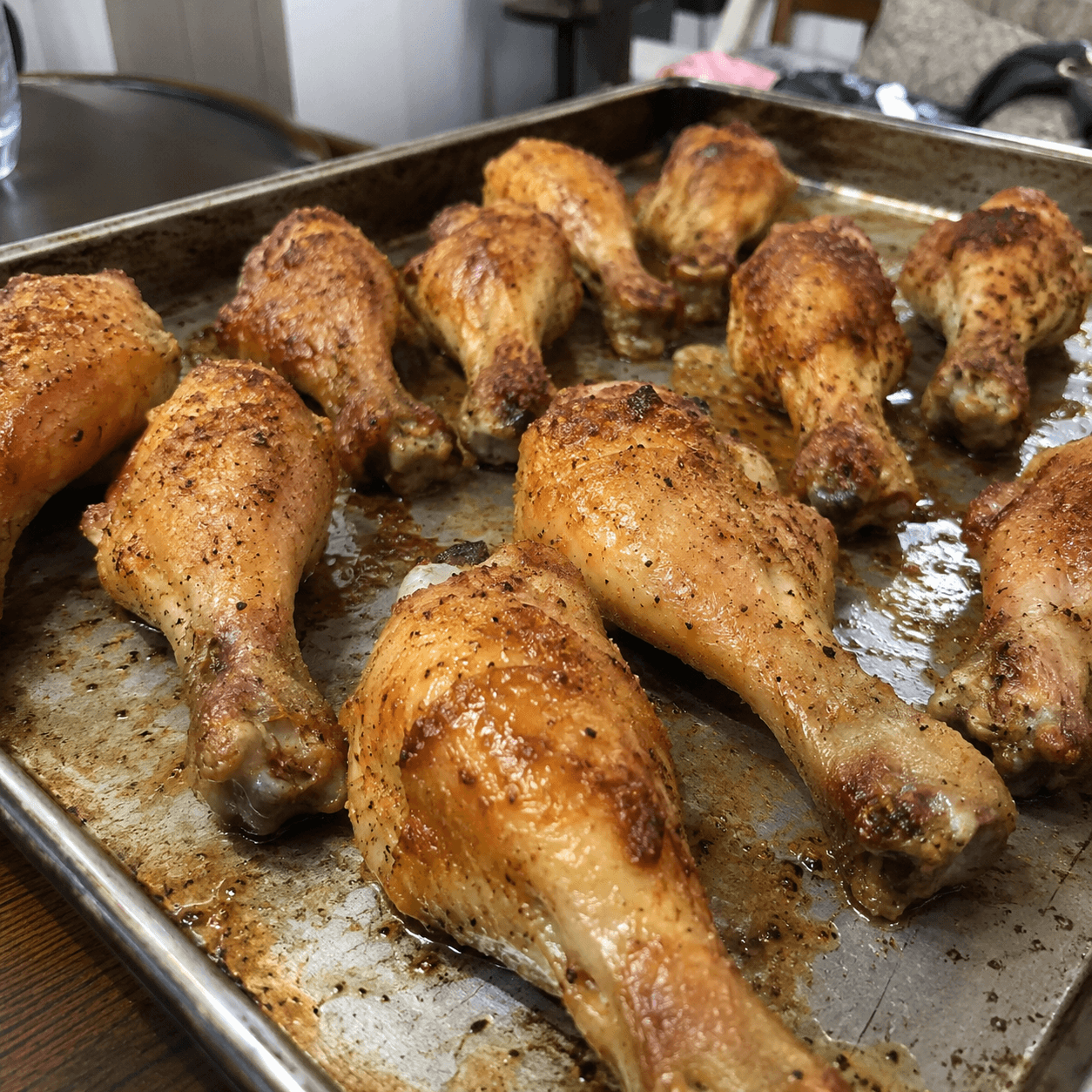
Chicken legs are the best deal in the meat case, but they usually get one of two bad endings: flabby, pale skin or meat that’s dried out by the time the skin finally crisps. These baked chicken legs fix both. A quick savory-sweet marinade seasons the meat all the way through, and a hot 425°F oven renders the fat so the skin turns deep golden and crackly — no frying, no flipping every five minutes. Ten minutes of hands-on work, and dark meat is forgiving enough that this recipe is nearly impossible to ruin. Here’s exactly how to do it, including how to tell when they’re truly done.
Why You’ll Love These Baked Chicken Legs
- Dark meat is built for the oven. Drumsticks stay juicy well past the point where chicken breast turns to sawdust, so your timing window is wide and stress-free.
- The marinade does double duty. It seasons the meat deeply and its touch of honey helps the skin brown and caramelize in the oven.
- They’re cheap. Drumsticks routinely run $1.50–$2.50 per pound, which puts this dinner around $6–$8 for four people.
- Hands-off cooking. One flip halfway through. That’s the whole job once they’re in the oven.
What You’ll Need
Serves 4
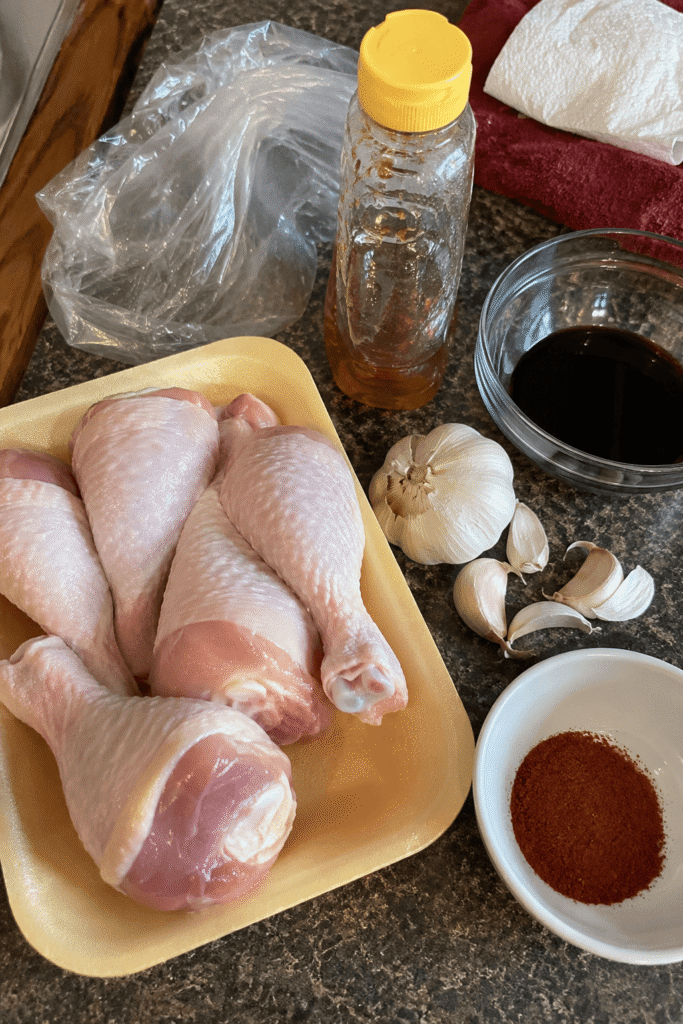
- 8 chicken drumsticks (about 2½ lbs) — Look for legs that are similar in size so they finish together. Bone-in thighs work with the same method; add about 5 minutes.
- 3 tablespoons olive oil — The base of the marinade; it carries flavor and helps crisp the skin.
- 3 tablespoons low-sodium soy sauce — The savory backbone. Coconut aminos work for a gluten-free version.
- 2 tablespoons honey — Just enough for browning and a hint of sweetness, not a sticky glaze. Brown sugar works too.
- 4 cloves garlic, minced — Fresh makes a real difference in a marinade this simple.
- 1 tablespoon lemon juice — Brightens everything. Apple cider vinegar is a fine swap.
- 2 teaspoons smoked paprika — Gives the skin that deep reddish-gold color. Regular paprika is fine, just milder.
- 1 teaspoon each onion powder and dried oregano, ½ teaspoon black pepper — No added salt needed; the soy sauce covers it.
- A gallon zip-top bag for marinating, plus a rimmed sheet pan and an oven-safe wire rack — The rack is the secret to crispy skin all the way around. No rack? A foil-lined pan works; just flip the legs halfway.
How to Make Juicy Baked Chicken Legs
- Mix the marinade. Whisk the olive oil, soy sauce, honey, garlic, lemon juice, paprika, onion powder, oregano, and pepper in a bowl until the honey dissolves. It should look glossy and brick-red.
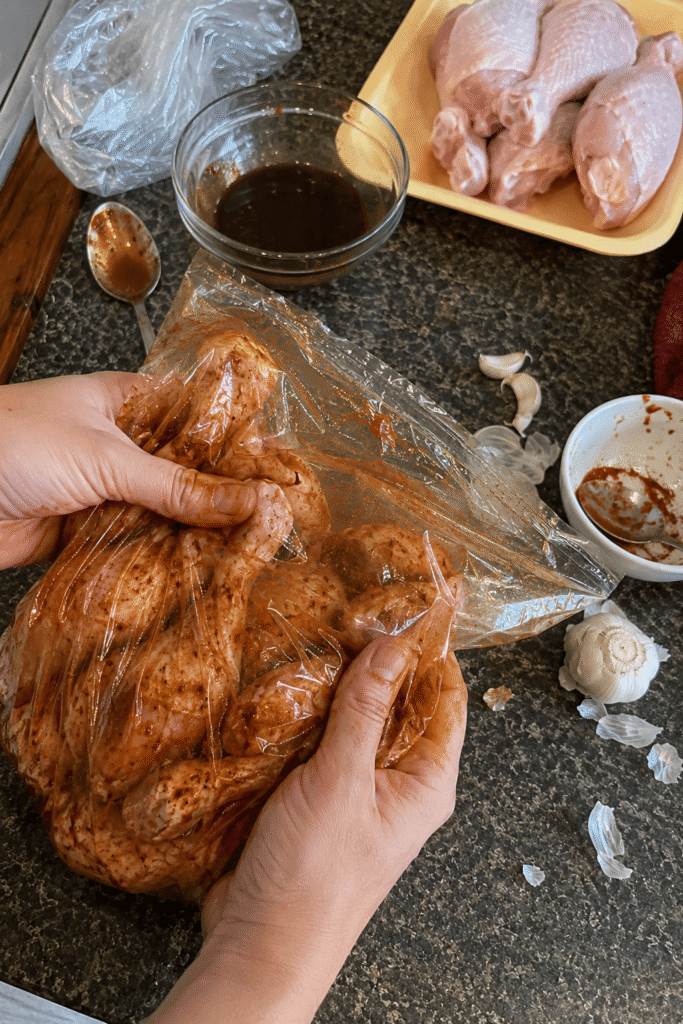
- Marinate. Pat the drumsticks dry, then add them to a zip-top bag with the marinade. Squeeze out the air, massage to coat, and refrigerate at least 30 minutes — up to 24 hours for the deepest flavor. Even a half hour makes a noticeable difference.
- Heat the oven to 425°F. Set a wire rack on a foil-lined rimmed sheet pan and give the rack a quick spray of oil. Let the chicken sit on the counter while the oven heats so it’s not fridge-cold going in.
- Arrange the legs. Lift them out of the marinade, let the excess drip off (dripping-wet legs steam instead of roast), and space them out on the rack. Discard the used marinade.
- Bake 40 to 45 minutes, flipping once at the 25-minute mark. You’re looking for skin that’s deep mahogany-gold with darkened, caramelized edges, and juices that run clear when you pierce the thickest part.
- Check the temperature. Dark meat is at its best at 180–185°F in the thickest part, not the 165°F minimum — the extra heat melts the connective tissue and makes drumsticks fall-apart tender instead of chewy. Don’t let the thermometer touch bone; it reads high.
- Rest 5 minutes before serving. The juices settle back into the meat, and the skin stays crisp while you get everything else on the table.
Pro Tips
- Dry the chicken before it hits the marinade. Patting the legs dry first helps the marinade actually stick to the skin instead of sliding off a layer of surface moisture.
- Don’t trust the clock over the thermometer. Drumstick sizes vary a lot. A $12 instant-read thermometer removes all the guesswork and pays for itself the first time you use it.
- Give them space on the pan. Legs touching each other trap steam and you’ll get soft spots in the skin. Use two pans before you crowd one.
- Broil for the last 2 minutes if you want extra crackle. Watch closely — the honey in the marinade goes from caramelized to burnt fast.
- Don’t tent them with foil while resting. Trapped steam is the enemy of the crispy skin you just worked for. Rest them uncovered.
Variations
- Spicy: Add 1 to 2 teaspoons of sriracha or ½ teaspoon cayenne to the marinade.
- BBQ finish: Skip the honey in the marinade, then brush the legs with barbecue sauce during the final 10 minutes of baking.
- Lemon-herb: Swap the soy sauce for 1 teaspoon kosher salt, double the lemon juice, and use rosemary and thyme in place of the paprika and oregano.
- Air fryer: Cook at 400°F for 22 to 25 minutes, flipping halfway. Same doneness cues apply.
Storage and Reheating
Refrigerate leftovers in an airtight container for up to 4 days. To bring the skin back to life, reheat in a 375°F oven (or air fryer) for 10 to 12 minutes — the microwave heats them fine but leaves the skin rubbery. Cooked drumsticks also freeze well for up to 3 months; thaw overnight in the fridge before reheating. Leftover meat pulled off the bone is great in fried rice, tacos, or chicken salad.

FAQ
How long do you bake chicken legs at 425°F? 40 to 45 minutes, flipping once halfway. They’re done when the skin is deep golden and the internal temperature reads 180–185°F in the thickest part.
Should I cover chicken legs when baking? No. Covering traps steam and gives you soft, pale skin. Bake them uncovered the entire time for crispy results.
Why are my baked chicken legs rubbery? Usually they’re undercooked. Dark meat needs to go past 165°F — up to 180–185°F — for the connective tissue to break down and the texture to turn tender.
Can I use this marinade on frozen chicken legs? Thaw them first. Marinade can’t penetrate frozen meat, and frozen legs release water that dilutes the flavor. Thaw overnight in the fridge, pat dry, then marinate.