Lasagna with Ricotta Cheese
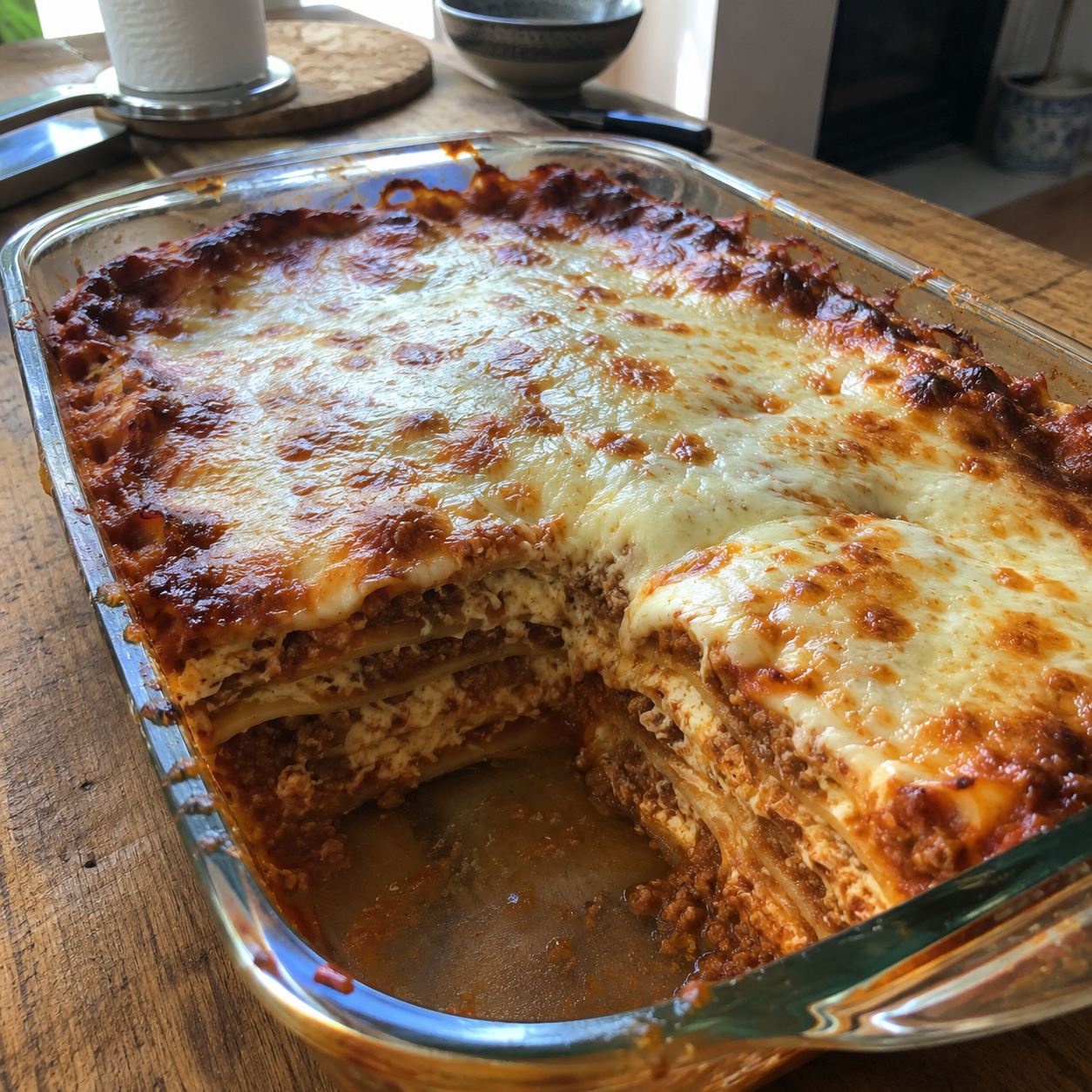
Lasagna has a reputation for being an all-day project. This one isn’t. You’ll spend about 30 minutes of actual hands-on time, and the oven does the rest. The payoff is a bubbling, deeply savory pan of pasta with a rich meat sauce, a creamy ricotta layer that stays put when you slice it, and a browned mozzarella top that pulls into long strings when you serve it.
The secret here is simple: a quick sauce built on good canned tomatoes, a ricotta filling bound with an egg so it doesn’t turn watery, and a proper rest before cutting. One 9×13 pan feeds eight people, and it freezes beautifully. Make it once and it’ll go straight into your regular rotation.
Why You’ll Love This Recipe
- No watery slices. The egg in the ricotta and a 15-minute rest give you clean, sturdy layers.
- Weeknight-friendly sauce. It simmers for just 20 minutes but tastes like it went all afternoon.
- Feeds a crowd or your freezer. Eight generous servings, and it reheats like a dream.
- Forgiving. Torn noodles, uneven layers, a little too much cheese — it all bakes out fine.
Ingredients You’ll Need
For the meat sauce:
- 1 lb ground beef (85/15 has the best flavor)
- 1/2 lb Italian sausage, casings removed (or use 1 1/2 lbs beef total)
- 1 medium yellow onion, diced
- 4 cloves garlic, minced
- 1 (28 oz) can crushed tomatoes
- 2 tbsp tomato paste
- 1 tsp dried oregano
- 1 tsp dried basil
- 1 tsp salt, plus more to taste
- 1/2 tsp black pepper
- Pinch of red pepper flakes (optional)
For the ricotta layer:
- 15 oz whole-milk ricotta cheese
- 1 large egg
- 1/2 cup grated Parmesan cheese
- 2 tbsp chopped fresh parsley (or 2 tsp dried)
- 1/4 tsp salt
For assembly:
- 12 lasagna noodles (regular, not no-boil — see tips)
- 1 lb low-moisture mozzarella, shredded (about 4 cups)
- 1/4 cup grated Parmesan, for the top
Ingredient notes: Whole-milk ricotta matters — part-skim can bake up grainy. If ricotta is hard to find, cottage cheese blended smooth works surprisingly well. Italian sausage adds fennel and depth, but all beef is fine. No crushed tomatoes? Pulse whole peeled tomatoes a few times, or use 3 cups of your favorite jarred marinara and skip the added salt.
How to Make It
- Brown the meat. Heat a large pot or deep skillet over medium-high heat. Add the beef and sausage, breaking them up with a spoon. Cook until no pink remains and the bottom of the pan has browned bits, 7 to 8 minutes. Spoon off all but about a tablespoon of fat.
- Build the sauce. Add the onion and cook until soft and translucent, about 4 minutes. Stir in the garlic and tomato paste; cook until the paste darkens slightly and smells sweet, about 1 minute.
- Simmer. Pour in the crushed tomatoes, oregano, basil, salt, pepper, and red pepper flakes. Bring to a gentle bubble, then lower the heat and simmer uncovered for 20 minutes, stirring now and then. It should thicken enough that a spoon dragged across the bottom leaves a trail. Taste and add salt if needed.
- Boil the noodles. While the sauce simmers, cook the lasagna noodles in well-salted water for 2 minutes less than the package says — they should bend easily but still feel firm in the center. Drain and lay them flat on a baking sheet so they don’t stick together.
- Mix the ricotta filling. Stir together the ricotta, egg, 1/2 cup Parmesan, parsley, and salt until smooth and spreadable.
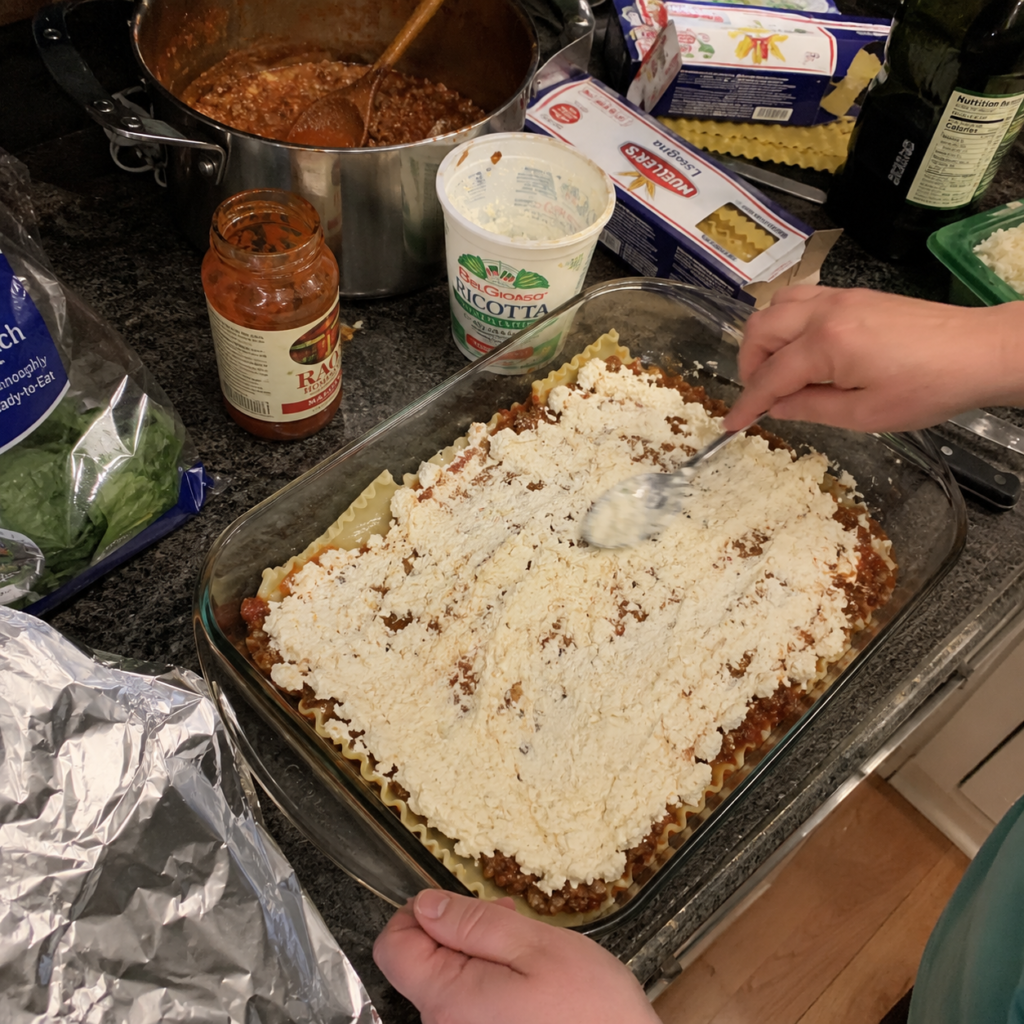
- Layer it up. Heat the oven to 375°F. Spread about 1 cup of sauce over the bottom of a 9×13 baking dish. Lay down 4 noodles, slightly overlapping. Spread half the ricotta mixture over the noodles, then a third of the remaining sauce, then a third of the mozzarella. Repeat: noodles, the rest of the ricotta, sauce, mozzarella. Finish with the last 4 noodles, the remaining sauce, the remaining mozzarella, and the 1/4 cup Parmesan.
- Bake. Cover with foil (tent it slightly so it doesn’t touch the cheese) and bake for 25 minutes. Uncover and bake another 20 to 25 minutes, until the edges are bubbling hard and the top has golden-brown spots. The center should hit at least 165°F if you’re checking with a thermometer.
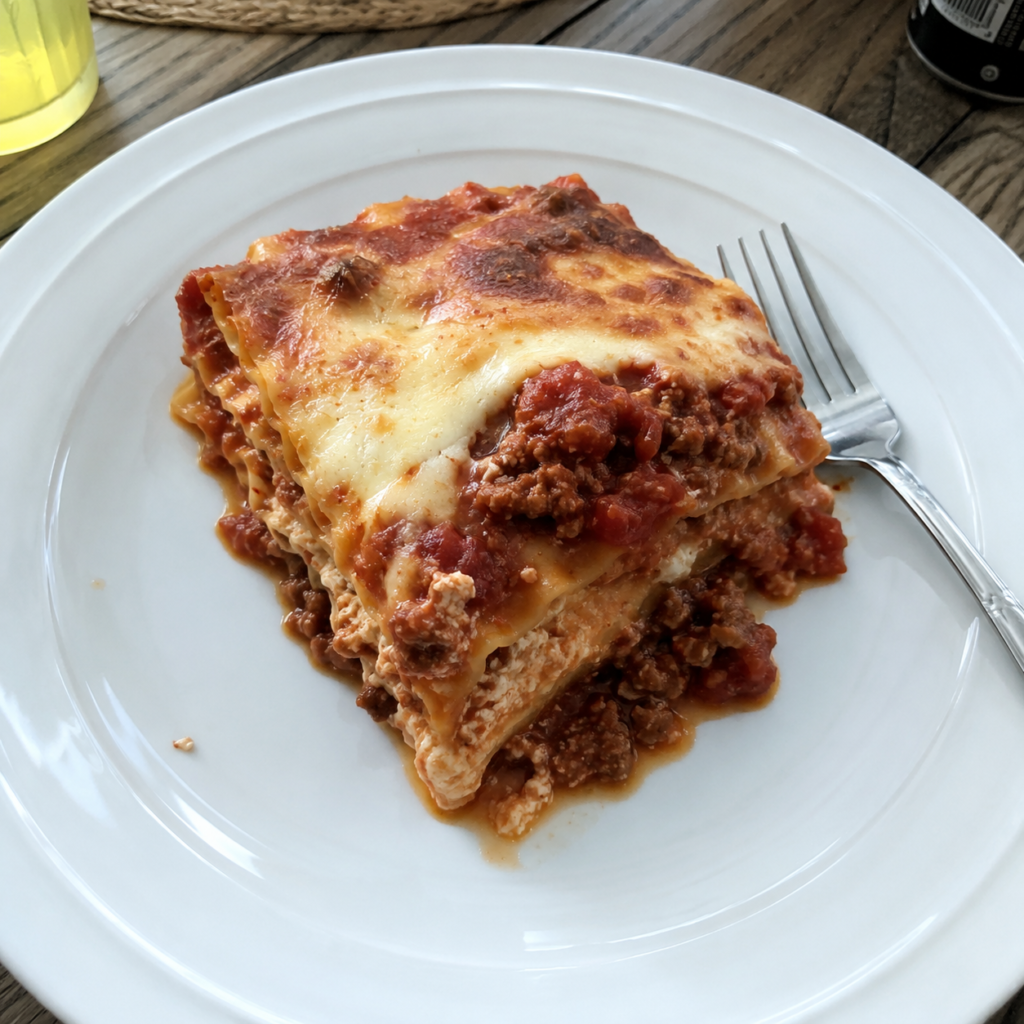
- Rest. This is the step everyone skips and regrets. Let the lasagna sit for 15 minutes before slicing. The layers set, the sauce thickens, and your first piece comes out looking like the photo instead of a puddle.
Pro Tips
- Don’t fully cook the noodles. They finish cooking in the oven. Fully boiled noodles turn mushy and tear when you serve.
- Spray the foil. A quick spritz of cooking spray on the underside keeps it from ripping the cheese off when you uncover.
- Salt the ricotta layer. Ricotta is bland on its own. That little bit of salt and Parmesan is the difference between creamy and flat.
- Make it a day ahead. Assemble, cover, and refrigerate up to 24 hours. Bake straight from the fridge, adding about 10 minutes to the covered time. It actually slices better this way.
- Watch the edges, not the clock. When the sauce is bubbling vigorously at the sides and the top is spotted brown, it’s done — ovens vary.
Variations & Substitutions
- Vegetable lasagna: Skip the meat. Sauté 8 oz sliced mushrooms and a diced zucchini until their liquid cooks off, then build the sauce the same way.
- Spinach ricotta: Squeeze a 10 oz package of thawed frozen spinach bone-dry and fold it into the ricotta mixture.
- No-boil noodles: They work — use them dry and add 1/2 cup water to the sauce so they have enough moisture to soften.
- Spicier: Use hot Italian sausage and bump the red pepper flakes to 1/2 teaspoon.
Storage & Reheating
Fridge: Cover tightly and refrigerate up to 4 days.
Freezer: Wrap individual slices in foil, then bag them — they keep for 3 months. You can also freeze the whole assembled, unbaked pan; bake from frozen, covered, at 375°F for about 60 minutes, then uncovered for 25 more.
Reheating: The oven wins. Cover a slice with foil and heat at 350°F for 20 to 25 minutes, until hot in the center. The microwave works in a pinch (2 to 3 minutes at medium power), but the noodles go a bit soft. Add a spoonful of water or sauce before reheating either way to keep it moist.
FAQ
Do I need to put an egg in the ricotta? It’s not mandatory, but it helps a lot. The egg binds the ricotta so the layer stays creamy and sliceable instead of running out the sides.
Why is my lasagna watery? Usually one of three things: the sauce was too thin, the noodles were overcooked, or it wasn’t rested before slicing. Simmer the sauce until thick, undercook the noodles, and wait the full 15 minutes.
Can I use cottage cheese instead of ricotta? Yes. Blend it briefly so it’s smooth, then use it exactly like the ricotta. It’s a little tangier and slightly lighter.
How many layers should lasagna have? Three noodle layers is the sweet spot for a standard 9×13 pan. More than that and the middle struggles to heat through before the top overbrowns.